Structurespy com: Features, Uses & Website Guide

If you have searched for structurespy com, you may have noticed that the name is associated with more than one type of description online. That makes it difficult to tell whether the website is primarily an engineering resource, an architecture-focused publication, a technology site, or something else.
The first point to establish is the exact web address. A current website at structurespy.com presents StructureSpy as a platform centered on remarkable structures, engineering, architecture, structural design, and educational content. Its own About Us page says the site was created to showcase notable structures and explain the engineering and design ideas behind them. At the same time, that page contains a separate description portraying the site as a provider of professional structural-analysis services.
There is also a different domain, structurespycom.com, whose homepage currently contains a broad mixture of business, home-improvement, lifestyle, health, and technology-related articles. That distinction matters because similarly named domains should not automatically be treated as the same organization.
Read More: Cute Animals: 25 Adorable Creatures That Will Make You Smile
What Is structurespy com?
structurespy com refers to the web presence associated with the domain structurespy.com. According to its own About Us page, StructureSpy was created around an interest in architecture, civil engineering, structural design, and notable structures around the world. The site says its purpose is to make structural engineering and architecture more accessible through articles and visual material.
The stated subject matter includes buildings, bridges, dams, stadiums, industrial facilities, and infrastructure. The website also describes content involving structural systems, engineering concepts, project case studies, and educational resources.However, readers should distinguish between a website’s stated mission and independently verified professional credentials.
The site’s own description is evidence of what it says it aims to do, but it is not by itself proof that every technical statement published there has undergone professional engineering review.That distinction is especially important when information could affect construction, structural safety, engineering decisions, or professional work.
What Does structurespy com Offer?
The website’s About Us page identifies several broad content areas.
Featured Structures: StructureSpy says it publishes profiles of significant structures, including buildings, bridges, dams, and stadiums. This type of content can be useful for readers who want to understand how prominent structures are designed and constructed.
For a general reader, a structure profile can provide useful context about a building or infrastructure project. For a student, it may also serve as a starting point for further research into structural systems, materials, construction methods, or architectural history.
Engineering and Structural Concepts: The site states that it covers structural systems, design concepts, and engineering innovations.This makes the platform potentially relevant to people who want introductory explanations rather than highly specialized engineering calculations. Still, technical readers should verify important formulas, design requirements, and safety-related claims using recognized engineering standards, textbooks, academic literature, or professional organizations.
Case Studies: StructureSpy also describes case studies involving real-world projects and structural challenges.Case studies can be valuable because they connect theoretical concepts with real structures. A good case study should explain the problem, constraints, design approach, materials, construction considerations, and results while identifying reliable sources for important technical claims.
Visual Content: The site says its material can include photographs, videos, and diagrams intended to make technical concepts easier to understand.Visual explanations are particularly useful in structural engineering because concepts such as load paths, structural systems, spans, supports, and material behavior can be difficult to communicate through text alone.
Educational Resources: The website also identifies educational resources for students and professionals in civil and structural engineering.Readers should nevertheless treat these materials according to their purpose. Educational content can supplement formal study, but it should not automatically be treated as a substitute for university instruction, engineering standards, licensed professional advice, or project-specific calculations.
Who May Find structurespy com Useful?
| User type | Potential value | Best way to use the information |
| Students | Introductory structural and architectural concepts | Use it as supplementary reading and verify technical claims |
| Engineers | Ideas, project examples, and general reference material | Cross-check professional or safety-critical information |
| Architecture enthusiasts | Background on notable structures and design | Use individual articles as starting points for further research |
| Travelers | Context about famous buildings and infrastructure | Verify historical or location-specific facts |
| General readers | Accessible explanations of structures and engineering | Compare important claims with authoritative sources |
For Students: Students may benefit from accessible explanations before moving to textbooks, academic papers, standards, and university resources. A general website can help introduce terminology and provide examples that make classroom concepts easier to visualize.It should not, however, replace formal coursework or authoritative technical references.
For Engineering Professionals: Professionals may find general project discussions useful for inspiration or background research. However, professional engineering decisions require a much higher evidentiary standard.A website article should not be used as the sole basis for structural calculations, material specifications, code compliance, safety decisions, or construction instructions.
For Architecture and Design Enthusiasts: This is arguably one of the most accessible audiences for the site’s stated mission. Information about iconic buildings, bridges, and structural innovations can help readers appreciate how architectural ideas interact with engineering constraints.
How Does structurespy com Work for Visitors?
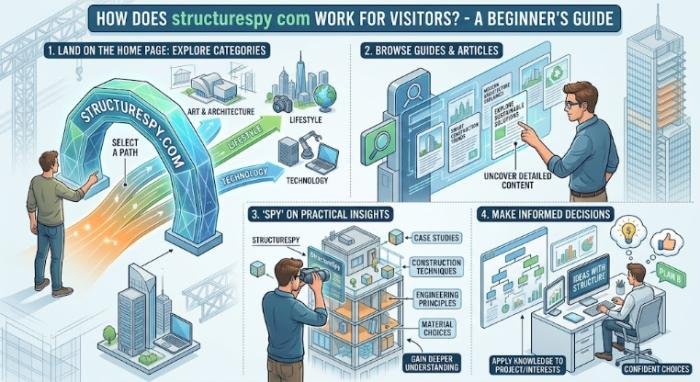
For a typical visitor, the most important function is informational rather than transactional. The website presents itself as a publication and resource focused on structures, engineering, and architecture. Its About Us page explains its intended content and audience rather than presenting a detailed public software platform.
Browsing Articles
Visitors can use the site to read articles concerning structures and related engineering or architectural subjects. The most useful approach is to evaluate each article individually rather than assuming every page has the same level of authority.
Checking the Source of a Claim
A strong research habit is to ask where an important statement originated.For example, if an article gives a structural measurement, construction date, engineering specification, or safety claim, look for the original source. A project owner’s website, government publication, university source, engineering organization, or original research paper is generally stronger evidence than an unattributed secondary article.
Checking Whether Information Is Current
Engineering standards, software, regulations, and construction practices can change. Even historical information can be revised when better evidence becomes available.For that reason, readers should check publication and update information whenever it is available and verify time-sensitive claims independently.
Is structurespy com a Reliable Source?
This question deserves a careful answer rather than a simple yes or no.The website provides a clear description of its intended subject matter and says it wants to make structural engineering and architecture accessible. However, that does not establish that every article has been independently reviewed by a licensed engineer, academic institution, or recognized professional organization.
Third-party pages also give conflicting descriptions of StructureSpy. One 2026 publication characterizes it as a source for structures and engineering concepts, while another describes it as an internal digital engineering tool. These conflicting accounts demonstrate why readers should rely on first-party evidence rather than repeating unsupported descriptions.
A Practical Credibility Test
When assessing a technical article, check:
- Who wrote it?
- Does the author identify relevant expertise?
- Are technical claims supported by sources?
- Are original sources cited?
- Is the publication date visible?
- Has the information been updated?
- Does the article distinguish fact from opinion?
- Can important claims be confirmed through an authoritative source?
Is structurespy com Safe to Visit?
Website safety and information reliability are two different questions.A site can contain harmless informational material while still providing insufficient evidence for professional use. Conversely, a technically useful website can still expose visitors to security risks if it contains malicious links or compromised content.For unfamiliar websites, basic precautions are sensible.
Protect Personal Information
Do not provide passwords, banking information, identification documents, or other sensitive data simply because a website requests them.The Federal Trade Commission advises consumers not to provide personal or financial information in response to unexpected requests and recommends contacting organizations through independently verified websites or contact information.
Be Careful With Unexpected Links
The FTC warns that phishing messages can direct users toward harmful websites or request sensitive information. Its guidance recommends avoiding unexpected links and attachments and instead contacting the supposed organization through a known, trusted channel.
The National Institute of Standards and Technology similarly advises users to treat unexpected links, attachments, login requests, and requests for sensitive information with caution.
Watch for Suspicious Downloads
Do not install software simply because an unfamiliar page tells you that a download is necessary.CISA notes that malicious websites can be used to distribute malware and that deceptive websites can appear in search results through techniques such as SEO poisoning.These are general cybersecurity precautions, not evidence that structurespy.com itself is malicious.
Is structurespy com a Structural-Engineering Tool?
The official About Us page presents StructureSpy as a platform focused on structures, engineering, architecture, design, educational resources, and related content. It also contains a separate description saying that StructureSpy provides professional structural-analysis services for the construction industry.
However, the public page does not provide enough independently verifiable information to establish the full scope of any professional engineering service, such as:
- The identity and credentials of specific engineers
- Professional licensing information
- Applicable engineering standards
- Software specifications
- Calculation methodologies
- Quality-assurance procedures
- Project references
- Regulatory approvals
Therefore, it would be inappropriate to assume that structurespy com is a substitute for professional structural-engineering software or a licensed engineering consultancy solely from the website’s descriptions.If a project involves real structural safety, calculations, construction approval, or code compliance, use qualified professionals and applicable local regulations.
How Should You Evaluate Technical Content From structurespy com?
A useful approach is to treat online engineering content as a research starting point.
Step 1: Identify the Claim
Separate the article’s main claim from general commentary.For example, a statement about the height of a building is different from a statement about why a particular structural system was selected.
Step 2: Find the Original Source
For factual information about a major structure, look for the project’s official documentation, government records, architectural or engineering publications, university research, or reputable reference sources.
Step 3: Verify Technical Information
For technical claims, compare the information against recognized standards, academic publications, engineering textbooks, or professional organizations.
Step 4: Consider the Consequences of Being Wrong
A minor historical error is not equivalent to an incorrect structural-safety recommendation.The higher the potential consequence, the stronger the source should be.
Pros and Limitations of structurespy com
Potential Advantages: Based on its stated purpose, StructureSpy can be useful for:
- General reading about structures and engineering
- Learning about notable buildings and infrastructure
- Finding ideas for further research
- Introducing structural concepts to non-specialists
- Providing accessible material for students and enthusiasts
- Connecting architectural ideas with engineering concepts
Limitations: There are also important limitations.
The site should not automatically be treated as an authoritative engineering standard or academic publication. The public About Us information does not establish that all content is independently peer-reviewed or professionally certified. In addition, conflicting third-party descriptions show that online commentary about the domain is not always dependable.For high-stakes technical work, readers should consult authoritative sources and qualified professionals.
How to Use structurespy com Responsibly
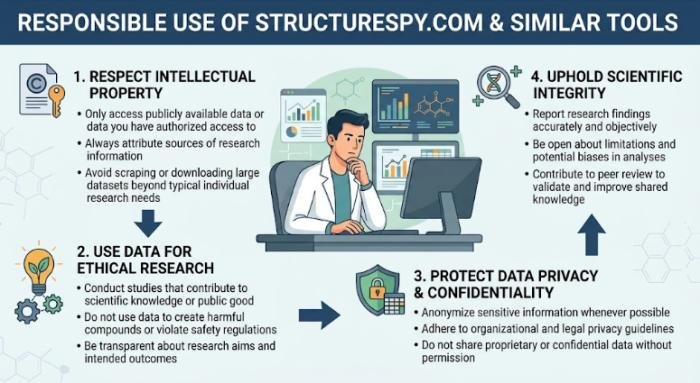
The best way to use structurespy com is as one part of a broader research process.Start with an article that introduces a structure or engineering concept. Identify the claims that matter most. Then follow those claims to stronger sources.
For example, if an article discusses a famous bridge, you could use it to identify the bridge’s name and general design concept. You could then consult the project’s official documentation, government transportation authority, engineering publications, or academic research for precise technical information.This approach preserves the accessibility of online content without confusing it with professional authority.
Final Verdict on structurespy com
structurespy com is associated with StructureSpy, whose official About Us page describes the website as a platform focused on remarkable structures, architecture, civil engineering, structural design, case studies, visual content, and educational material.There is value in that type of content, particularly for students, enthusiasts, travelers, and general readers who want accessible explanations of the built environment.
At the same time, readers should be careful about treating every online claim as verified professional information. Third-party descriptions of the domain are inconsistent, and the site’s own public material contains more than one description of its role.The most responsible conclusion is therefore straightforward: use structurespy com as an informational starting point, verify important technical claims against authoritative sources, and never rely on an unverified web article alone for safety-critical engineering decisions.That balanced approach gives readers the usefulness of online research while preserving the standards expected from reliable, evidence-based information.
Frequently Asked Questions About structurespy com
Q1: What is structurespy com?
Ans: structurespy com refers to the website associated with StructureSpy at structurespy.com. Its own About Us page describes the platform as focusing on structures, architecture, civil engineering, structural design, case studies, visual content, and educational resources.
Q2: What does structurespy com publish?
Ans: The site’s stated content includes profiles of notable structures, engineering concepts, structural systems, case studies, photographs, videos, diagrams, and educational material related to architecture and engineering.
Q3: Who is structurespy com intended for?
Ans: The website says it is intended for engineering professionals and students, architecture and design enthusiasts, travelers and urban explorers, and general readers interested in the built environment.
Q4: Is structurespy com an engineering software platform?
Ans: The available first-party information does not establish that it is a conventional engineering software platform. Its public description focuses primarily on structures, architecture, engineering content, and educational resources. Some third-party websites make stronger claims, but those claims should be independently verified.
Q5: Is structurespy com the same website as structurespycom.com?
Ans: No conclusion of common ownership should be made simply from the names. They are different domains. structurespy.com presents StructureSpy as a structures and engineering-focused platform, while structurespycom.com currently displays a much broader collection of business, lifestyle, health, home-improvement, and technology articles.
Q6: Can students use structurespy com for research?
Ans: Yes, it can potentially serve as supplementary reading or a starting point for research. Students should verify important facts through university resources, peer-reviewed research, official project documentation, recognized engineering organizations, or other authoritative sources.
Q7: Can engineers rely on structurespy com for structural calculations?
Ans: General website content should not be treated as the sole basis for structural calculations or safety-critical engineering decisions. Project-specific work should follow applicable codes and standards and be reviewed by appropriately qualified professionals.
Q8: Is structurespy com safe?
Ans: There is not enough evidence to make an absolute safety judgment about every aspect of a website. Visitors should follow normal cybersecurity practices: verify the domain, avoid unexpected downloads, protect sensitive information, and be cautious with suspicious links. The FTC and NIST recommend these types of precautions for unfamiliar online interactions.