Clickfor Net – Easy Online Access, Features, and User-Friendly Experience

In today’s digital world, accessing online platforms quickly and conveniently has become an important part of everyday life. Users prefer websites that offer simple navigation, smooth performance, and an easy-to-use interface without unnecessary complications. Clickfor Net is a keyword associated with convenient online access and a user-friendly browsing experience.
Understanding the importance of website accessibility, useful features, and simple navigation can help visitors make better decisions when using online platforms. This article highlights the main aspects of Clickfor Net and explains what contributes to a smooth and convenient online experience.
What Is Clickfor Net?
Clickfor Net is the main focus of this article and represents an online search term that users may encounter when searching for convenient internet access or digital website experiences.
People generally expect online platforms to provide useful information through an accessible and organized interface. A website should make it easy for visitors to understand its purpose, navigate between sections, and locate relevant content.
When evaluating a platform associated with Clickfor Net, users should consider its available services, website structure, accessibility, and overall browsing experience. A helpful online platform should focus on three important areas:
- Accessibility: Visitors should be able to reach the website without unnecessary complications.
- Navigation: Menus and sections should be organized logically.
- Usability: Website features should be easy to understand and operate.
Read More: Financecub Com: Smart Financial Tips, Money Management and Planning
Why Easy Online Access Matters
Easy online access is one of the most important factors influencing how people interact with websites. Internet users often have limited time and want to reach their preferred information as quickly as possible.
A website that requires unnecessary steps or contains confusing navigation can discourage visitors. Therefore, simplicity should be an important consideration when developing or evaluating an online platform.
1. Saves Time for Visitors
A well-organized website helps visitors find relevant information quickly. Clear menus, readable headings, and properly arranged sections reduce the time required to navigate different pages.
For example, when users visit a website, they generally expect to understand its main purpose immediately. If important information is placed in visible sections, visitors can move through the website more efficiently.
2. Provides Convenient Navigation
Navigation determines how easily visitors can move between different website sections. A simple navigation system usually includes:
- A clearly visible homepage.
- Organized menu categories.
- Readable page titles.
- Relevant internal links.
- Easy-to-identify navigation options.
3. Supports Different Types of Users
Not everyone has the same level of technical knowledge. Some visitors are experienced internet users, while others may be less familiar with online platforms.
A straightforward interface helps accommodate both groups.
Simple language, recognizable icons, and clear instructions make a website easier to use. Visitors should not need advanced technical knowledge to understand basic website functions.
Important Features of a User-Friendly Website
A good online experience depends on several website features working together. Although different platforms provide different services, certain characteristics are useful for almost every type of website.
The following features are important when evaluating a platform associated with Clickfor Net.
1. Simple and Organized Interface
The interface is the first thing visitors interact with when opening a website. A clean design helps users understand the available sections without unnecessary confusion. An organized interface should avoid overcrowded layouts, excessive advertisements, and complicated menus.
Important information should be easy to identify, while secondary content should remain properly arranged. A simple interface also improves readability because visitors can concentrate on the information instead of trying to understand the website’s structure.
2. Fast Page Loading
Website speed plays an important role in user satisfaction. Visitors generally prefer websites that load quickly and respond smoothly.
Slow-loading pages can interrupt browsing and make users less interested in continuing. Several factors influence website performance, including:
- Image file sizes.
- Website hosting quality.
- Server response time.
- Page design and coding.
- Unnecessary scripts and plugins.
- Internet connection quality.
Website owners should regularly check loading performance and optimize their pages to provide a smoother experience.
3. Mobile-Friendly Design
Many people access websites through smartphones and tablets rather than desktop computers.
A mobile-friendly website automatically adjusts its layout according to the visitor’s screen size. For example, a responsive website should provide:
- Readable text without excessive zooming.
- Properly sized buttons.
- Easy-to-use navigation menus.
- Images that fit the screen.
- Proper spacing between interactive elements.
Mobile compatibility is particularly important because visitors may access Clickfor Net-related pages from different devices.
4. Clear Website Navigation
A website should make it easy for visitors to understand its structure. Navigation menus should use familiar words and meaningful categories. Visitors should be able to identify important sections without searching through unrelated pages.
Internal links can also help users move between relevant articles and website sections. However, links should always be useful and clearly connected to the surrounding content.
5. Readable and Helpful Content
Content is another important part of the online experience. Visitors usually come to websites because they want information, instructions, or access to particular services. Therefore, content should be relevant, accurate, and easy to understand. Good website content generally includes:
- Clear headings and subheadings.
- Short and organized paragraphs.
- Accurate information.
- Relevant examples.
- Proper grammar and spelling.
- Useful explanations.
Clickfor Net and the Importance of Online Accessibility

Online accessibility means making websites usable by people with different devices, browsing habits, and abilities.
Accessibility is not limited to opening a website. It also involves making information understandable and ensuring that visitors can interact with important website elements.
For example, some users may have difficulty reading small text, while others may depend on keyboard navigation or screen-reading software. Website owners can improve accessibility by following several practices.
Use Readable Typography
Text should have an appropriate font size and sufficient contrast against its background.
Decorative fonts may look attractive, but they can make longer paragraphs difficult to read. Simple typography helps visitors concentrate on the content.
Add Descriptive Links
Links should explain where they lead. Instead of using unclear phrases such as “click here” repeatedly, website owners should use meaningful link descriptions.
Organize Content Properly
Headings and subheadings create a logical content structure. They allow readers to scan an article and locate relevant sections without reading every paragraph. A consistent heading hierarchy also helps assistive technologies interpret website content.
Provide Alternative Text for Images
Images can communicate useful information, but visitors using screen readers may not be able to interpret them visually. Alternative text provides a written description of meaningful images. This makes visual content more accessible to a wider audience.
Comparing Important Website Features
Different website features contribute to different aspects of the browsing experience. The following table summarizes several important areas to consider when evaluating an online platform.
| Website Feature | Main Purpose | User Benefit |
| Simple Interface | Organizes website elements | Easier navigation |
| Fast Loading | Improves page performance | Less waiting time |
| Mobile Compatibility | Adjusts to different screens | Convenient smartphone access |
| Clear Navigation | Connects website sections | Faster content access |
| Readable Content | Presents useful information | Better understanding |
| Website Security | Protects visitors and data | Safer browsing |
| Regular Updates | Keeps information current | More reliable content |
| Accessibility | Supports different user needs | More inclusive experience |
How to Access Online Platforms Conveniently
Accessing an online platform should be a straightforward process. However, users should always make sure they are visiting the correct website. When searching for Clickfor Net, consider following these general steps.
Step 1: Search for the Correct Website
Enter the exact keyword into your preferred search engine.
Review the available results carefully and check whether the website name and address match the platform you intend to visit. Avoid clicking unfamiliar advertisements or suspicious links.
Step 2: Check the Website Address
Before opening a website or entering information, review its web address. A secure website generally uses HTTPS encryption. However, HTTPS alone does not guarantee that a website is legitimate. Check the domain spelling and make sure it matches the intended destination.
Step 3: Review the Homepage
Once the website opens, examine its homepage. Look for clear navigation menus, relevant information, and recognizable website sections. A properly organized homepage should help visitors understand the platform’s purpose.
Step 4: Explore Available Sections
If the website provides different categories, review them to understand the available content. Use navigation menus and internal links to move between relevant pages. Avoid interacting with unfamiliar pop-ups or unnecessary downloads.
Step 5: Follow Basic Security Practices
Online safety should always be a priority. Never provide passwords, personal information, or financial details unless you have verified that the website and its services are legitimate and trustworthy.
The Role of Website Security and Privacy
Website security is an important part of a reliable online experience. Visitors should feel confident that their browsing activities and personal information are handled responsibly.
Although no website can guarantee complete protection against every online threat, several security practices can reduce common risks.
HTTPS Encryption
HTTPS helps protect information transferred between a visitor’s browser and a website. It is an important security feature, especially when users interact with forms or other areas that process information.
However, users should remember that encrypted connections do not automatically make every website trustworthy.
Privacy Policies
A privacy policy explains how a website collects, uses, stores, and manages personal information. Before submitting personal data, visitors should review the website’s privacy information. A clear privacy policy should explain:
- What information the website collects.
- Why the information is collected.
- How collected information is used.
- Whether information is shared with third parties.
- How users can contact the website regarding privacy concerns.
Avoid Suspicious Downloads
Unknown websites may display download buttons or unexpected pop-ups. Visitors should avoid downloading files from unfamiliar sources, especially when the website does not clearly explain what the files contain.
Keeping browsers and security software updated can also help reduce exposure to common online threats.
Why Mobile Compatibility Is Important for Clickfor Net
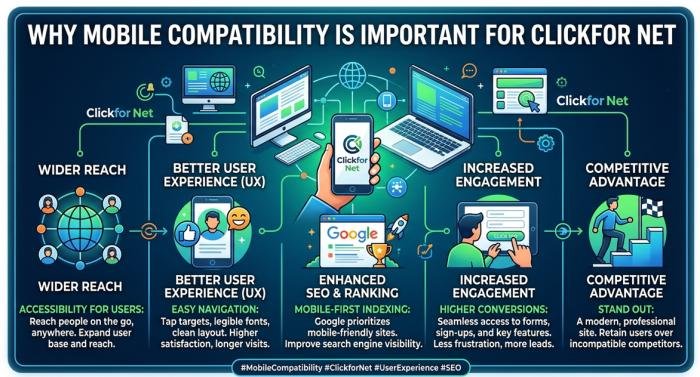
Smartphones have changed how people access online information. Many visitors now expect websites to work properly on smaller screens. A mobile-friendly design makes it easier to browse content while traveling, relaxing at home, or using a smartphone during everyday activities.
There are several reasons why mobile compatibility matters. Convenient Browsing: Users can access website content without needing a desktop computer. Flexible Layout: Responsive pages automatically adjust to different screen sizes.
Better Readability: Proper font sizes and spacing make content easier to read. Easy Navigation: Mobile menus help visitors move between website sections. Improved Accessibility: Responsive designs can make website functions more convenient across different devices.
For website owners, mobile compatibility is also an important consideration for search engine optimization. Google primarily uses the mobile version of website content for indexing and ranking. Therefore, maintaining a functional mobile experience is important for websites that want to perform well in search results.
How Clickfor Net-Related Content Can Improve User Experience
Content quality is an important factor in creating a positive website experience. When users search for a particular keyword, they usually expect information that directly relates to their search. Articles targeting Clickfor Net should therefore provide relevant explanations rather than repeating the keyword without adding meaningful information.
Focus on Search Intent
Search intent describes the reason behind a user’s search. Someone searching for Clickfor Net may want to find a particular website, understand its purpose, or obtain information about its features. Website content should address the intended topic clearly.
Use Natural Keyword Placement
Keywords help search engines understand the subject of a page. However, excessive keyword repetition can make content difficult to read. A natural approach includes placing the primary keyword in appropriate locations, such as:
- The page title.
- The opening paragraph.
- Relevant subheadings.
- The main article content.
- The conclusion.
Provide Useful Information
An article should offer something valuable to readers. Instead of repeating similar statements, website owners should include practical explanations, examples, and information that answers common questions. This approach helps make the content more useful and readable.
Best Practices for Website Owners
Creating a user-friendly website requires ongoing attention. Publishing a page is only the beginning of the process. Website owners should regularly evaluate performance, content quality, accessibility, and security. Here are several practices worth following.
1. Maintain a Consistent Design
Use consistent colors, typography, button styles, and navigation elements throughout the website.
2. Update Content Regularly
Review published information and correct outdated or inaccurate statements.
3. Optimize Images
Compress images without significantly reducing their quality. Properly optimized images can help improve page loading speed.
4. Test Different Devices
Check website functionality on smartphones, tablets, and desktop computers.
5. Remove Broken Links
Broken links can interrupt browsing and make a website appear poorly maintained.
6. Improve Page Structure
Use descriptive headings, organized paragraphs, and relevant internal links.
7. Prioritize Security
Keep website software updated and use appropriate security measures.
8. Listen to Visitor Feedback
User feedback can help identify navigation problems, missing information, and areas that need improvement.
The Future of Easy Online Access
Online technology continues to develop, changing how people interact with websites and digital services. Website visitors increasingly expect fast performance, accessible content, and interfaces that work smoothly across different devices. Several developments are likely to remain important in the future.
Improved Responsive Experiences
Websites will continue adapting their layouts to different screen sizes and devices. This will make online information more convenient to access.
Simpler Navigation Systems
Modern website designs increasingly prioritize clear menus and straightforward user journeys. Reducing unnecessary steps can help visitors reach their intended content more efficiently.
Greater Attention to Privacy
Users are becoming more aware of how websites collect and process personal information. Transparent privacy policies and responsible data practices will remain important for building trust.
More Accessible Website Designs
Accessibility will continue to influence website development. Readable text, descriptive navigation, keyboard support, and meaningful image descriptions can help create more inclusive online experiences.
Better Website Performance
Fast loading times and responsive interactions will remain important expectations. Website owners will need to monitor performance and address technical problems regularly.
Conclusion
Clickfor Net – Easy Online Access, Features, and User-Friendly Experience emphasizes the importance of simplicity, accessibility, and convenience in today’s online environment. A well-organized website with responsive design, fast loading speed, clear navigation, and reliable security practices can make browsing more comfortable for visitors.
As digital technology continues to develop, users will increasingly expect online platforms to provide smooth performance and accessible information. Choosing websites that prioritize usability, transparency, and visitor safety is an important step toward enjoying a better online experience.
Frequently Asked Questions
Q1: What is Clickfor Net?
Ans: Clickfor Net is the primary keyword discussed in this article. People searching for it may be interested in finding an online platform or information related to convenient website access. Visitors should verify the correct website and its available services before interacting with it.
Q2: Why is Clickfor Net important for online users?
Ans: The topic highlights the importance of convenient website access, simple navigation, and a user-friendly browsing experience. These qualities help visitors interact with online platforms more comfortably.
Q3: Can I access Clickfor Net using a smartphone?
Ans: Smartphone accessibility depends on the website’s actual design and compatibility. A responsive website should adjust its layout to smaller screens and provide readable content and convenient navigation.
Q4: What features make a website user-friendly?
Ans: Important features include a clean interface, fast loading speed, responsive design, clear navigation, readable content, accessible layouts, and appropriate security practices.
Q5: Is website security important when visiting Clickfor Net?
Ans: Yes. Website security is important whenever you access an online platform. Check the domain address, look for HTTPS encryption, avoid suspicious downloads, and never share sensitive information with unverified websites.