How Many Creases Are There in Cricket and Why Are They Important?

Cricket is one of the most popular sports in India, enjoyed by millions of fans, students, and aspiring players. Whether you’re watching an international match, playing cricket with friends, or learning the basics of the game, you’ll often hear commentators and umpires mention different crease lines on the pitch.
Many beginners ask, how many creases are there in cricket? The answer may seem simple, but understanding these creases is essential because they play a major role in batting, bowling, scoring runs, and umpiring decisions.
If you’ve ever wondered how many creases are there in cricket?, Will explain everything in an easy-to-understand way. We’ll cover the different types of creases, their measurements, their purpose, and why they are so important in every cricket match.
Read More: Jojoy Minecraft Guide Download Features & Safety Tips
How Many Creases Are There in Cricket?
The straightforward answer to how many creases are there in cricket? is that there are three types of creases at each end of the pitch:
- Bowling Crease
- Popping Crease
- Return Crease
Since a cricket pitch has two ends, these crease markings appear at both ends of the pitch. Together, they create the framework that helps players and umpires follow the laws of cricket.When people ask how many creases are there in cricket?, they are usually referring to these three important crease types that define legal play during a match.
Quick Answer
A cricket pitch contains:
- One Bowling Crease at each end
- One Popping Crease at each end
- Two Return Creases at each end
These markings help determine legal deliveries, batting positions, run-outs, stumpings, and many other game situations.
What Is a Cricket Crease?
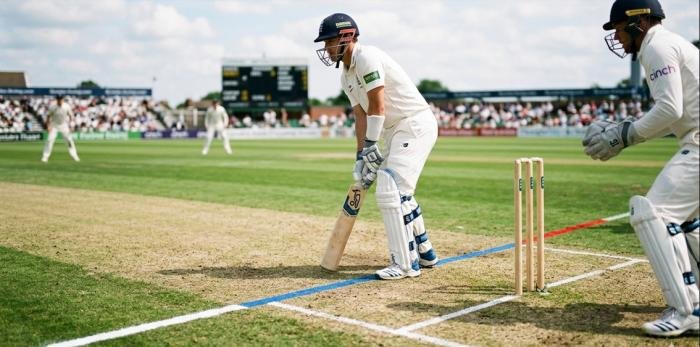
A crease is a white line marked on the cricket pitch that serves as a reference point for players and umpires. These lines may appear simple, but they are among the most important markings in cricket. Every delivery, run, and dismissal can involve one or more crease lines. The main purpose of creases is to:
- Define legal bowling positions
- Mark safe areas for batters
- Assist umpires in decision-making
- Ensure fair play during the match
Why Are Creases Marked on the Pitch?
Cricket is a game governed by precise laws, and crease markings play a crucial role in ensuring those laws are applied consistently and fairly. The crease lines act as fixed reference points used by umpires to make accurate decisions during play.
Key reasons crease markings are important:
To determine whether a batter is safely inside their ground (for run-out decisions)
To judge run-out situations accurately by defining the popping crease as the safe zone
To decide stumpings, especially when the batter steps out of the crease
To check the legality of bowling actions, such as no-balls for overstepping the front foot crease
To regulate the wicketkeeper’s movement behind the stumps during deliveries
To define safe running areas during play, ensuring fairness between batting and fielding sides
To maintain consistency in umpiring decisions using fixed, visible reference points
This is why understanding how many creases are there in cricket is important for both players and spectators, as these markings directly influence key match decisions.
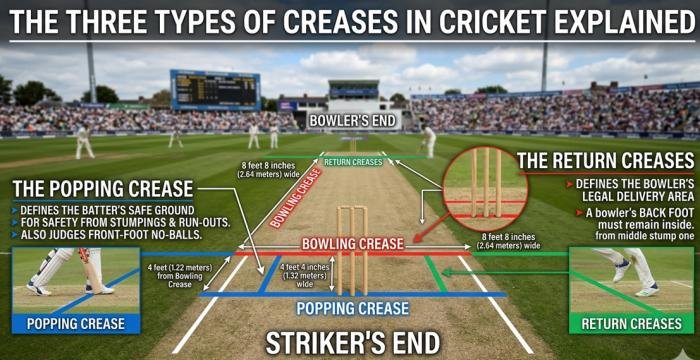
The Three Types of Creases in Cricket Explained
Bowling Crease
The bowling crease is the line on which the stumps are positioned.It runs horizontally across the pitch and serves as the foundation for several measurements used in cricket.
Purpose of the Bowling Crease. The bowling crease helps:
- Position the stumps correctly
- Establish the pitch layout
- Define the location of other crease markings
Although spectators may not focus on it often, the bowling crease plays a fundamental role in setting up the cricket pitch.
Bowling Crease Measurement: The bowling crease is traditionally 8 feet 8 inches (2.64 meters) long and passes through the center of the three stumps.
Popping Crease
The popping crease is perhaps the most recognized crease in cricket. Located in front of the batting stumps, it is the line that batters must reach to be considered safely in their ground. When discussing how many creases are there in cricket?, the popping crease is usually the one most fans are familiar with because it frequently appears in run-out and stumping decisions.
Functions of the Popping Crease. The popping crease is used for:
- Determining run-outs
- Determining stumpings
- Identifying safe ground for batters
- Assisting with scoring runs
Distance from the Stumps: The popping crease is located 4 feet (1.22 meters) in front of the bowling crease.This distance has remained a standard part of cricket pitch measurements for many years.
Return Crease
The return crease is less well-known among casual fans but is extremely important. Two return creases are marked perpendicular to the bowling crease at each end of the pitch. These lines help determine whether a bowler delivers the ball legally.
Purpose of the Return Crease. The return crease helps:
- Control the bowler’s position
- Prevent illegal deliveries
- Assist umpires in judging no-balls
- Maintain fairness in bowling actions
Cricket Crease Measurements at a Glance
The following table summarizes the three main crease types and their purpose.
| Crease Type | Location | Main Purpose | Standard Measurement |
| Bowling Crease | Through the stumps | Reference line for pitch setup | 2.64 meters |
| Popping Crease | 1.22 meters in front of stumps | Safe ground for batters | Extends across pitch |
| Return Crease | Perpendicular to bowling crease | Legal bowling position | Extends behind popping crease |
How the Three Creases Work Together
Although each crease serves a different purpose, they all work together to ensure fair play. Imagine a batter attempting a quick run. The popping crease determines whether they are safe. At the same time, the bowler must remain within the return crease limits while delivering the ball.
Meanwhile, the bowling crease provides the central reference point for the entire setup. This coordinated system helps maintain consistency across all levels of cricket, from local matches to international tournaments.
Why Are Creases Important in Cricket?
Understanding how many creases are there in cricket? becomes much more meaningful when you understand their role in the game.
Importance for Batters
For batters, crease lines provide safety and clarity. They help determine:
- Whether a batter has completed a run
- Whether a batter is safely inside their ground
- Whether a batter can be stumped
Importance for Bowlers
For bowlers, crease markings are equally important. They help ensure:
- Legal deliveries
- Correct bowling action
- Fair competition
Importance for Umpires
Umpires rely heavily on crease markings throughout a match. They use them to judge:
- Run-outs
- Stumpings
- No-balls
- Dead-ball situations
- Legal player positioning
Cricket Rules That Depend on Creases
Run-Out Decisions
A batter must have some part of their body or bat grounded behind the popping crease to be considered safe. If the wicket is broken before the batter reaches the crease, they may be given out.
Stumping Decisions
When a batter leaves their crease and misses the ball, the wicketkeeper may attempt a stumping. The umpire uses the popping crease to determine whether the batter was safely within their ground at the moment the wicket was put down.
No-Ball Decisions
Bowlers must deliver the ball from a legal position. If they violate crease regulations, the umpire may call a no-ball, resulting in an extra run and a free hit in many limited-overs formats.
Advanced Cricket Rules That Depend on Creases
While run-outs, stumpings, and no-balls are the most common examples, several other cricket laws also rely on crease markings.
Hit Wicket Dismissals
A batter can be given out hit wicket if they accidentally dislodge their own stumps while playing a shot or setting off for a run. In many cases, the umpire uses the batter’s position relative to the crease to determine whether the dismissal occurred during active play.
Run-Out at the Non-Striker’s End
One of the most discussed rules in modern cricket involves the non-striker leaving the crease before the bowler releases the ball. If the non-striker moves too far out of their ground, the bowler can run them out before completing the delivery. This dismissal has become a frequent topic of debate among players and fans, but it remains a legal form of run-out under the Laws of Cricket.
Dead Ball Situations
Certain unusual events can lead to a dead-ball call. Crease markings help umpires judge player positions and determine whether a delivery should remain in play or be declared dead. These situations may seem rare, but they demonstrate why understanding how many creases are there in cricket? is important even for advanced followers of the game.
How Technology Uses Creases in Modern Cricket
Cricket has changed dramatically with the introduction of technology. Today, cameras, sensors, and replay systems rely heavily on crease markings to assist officials.
Third Umpire Decisions
The third umpire frequently examines crease positions during:
- Run-outs
- Stumpings
- Close catches near the boundary of the batting ground
High-definition cameras allow officials to determine whether a batter or bat was grounded behind the popping crease at the exact moment the wicket was broken.
DRS and Crease-Based Judgments
The Decision Review System (DRS) has improved the accuracy of many cricket decisions. Although DRS is often associated with LBW appeals, it also supports crease-related reviews by providing multiple camera angles and frame-by-frame analysis.
Ultra-Motion and No-Ball Checks
Television broadcasts now use ultra-motion cameras to monitor bowlers’ front feet. A tiny overstep beyond the popping crease can result in a no-ball. Because of these advanced technologies, even the smallest crease violation can be detected with remarkable precision.
Common Mistakes Beginners Make About Cricket Creases
Many new cricket fans misunderstand the purpose of crease markings. Here are some common misconceptions.
Confusing the Bowling Crease and Popping Crease
A frequent mistake is assuming these two creases serve the same purpose. In reality:
- The bowling crease is where the stumps are positioned.
- The popping crease determines a batter’s safe ground.
Thinking All Creases Are Equally Visible During Play
The popping crease receives the most attention because it is directly involved in run-outs and stumpings. However, return creases are just as important for bowlers and umpires.
Believing the Bat Must Cross the Entire Line
Many beginners assume a batter’s entire body or bat must move well beyond the crease. In reality, only part of the bat or body needs to be grounded behind the crease to establish safety.
Ignoring Return Creases
Casual viewers often focus only on batting-related creases. Yet return creases are critical in ensuring fair bowling actions and preventing illegal deliveries.
Interesting Facts About Cricket Creases
Creases Were Not Always Painted Lines
In the early days of cricket, creases were often marked using scratches or grooves in the ground. Over time, these markings evolved into the clearly painted white lines used today.
The Popping Crease Is One of Cricket’s Most Important Lines
Thousands of international matches have been decided by fractions of an inch at the popping crease. Modern cameras regularly reveal outcomes that would have been impossible to judge accurately decades ago.
Creases Influence Nearly Every Ball
From the moment a bowler begins their run-up until the completion of a run, crease markings influence player behavior and umpire decisions. This is another reason why the question how many creases are there in cricket? remains relevant for anyone learning the game.
Creases Help Maintain Fair Play
Without crease regulations, batters and bowlers could gain unfair advantages. The standardized dimensions ensure that cricket is played consistently across different grounds and countries.
Cricket Creases Compared With Other Sports
Every sport uses markings to define boundaries and player positions.how many creases are there in cricket? However, cricket creases are unique because they influence nearly every aspect of gameplay.
Cricket vs Baseball
Baseball uses bases to establish safe zones. Cricket uses crease lines instead. While both systems determine whether a player is safe or out, cricket relies more heavily on precise line markings.
Cricket vs Football
Football field markings primarily define playing areas. Cricket crease markings directly affect dismissals, legal deliveries, and scoring opportunities.
Why Cricket Creases Are Unique
Few sports depend so heavily on painted lines for officiating decisions.how many creases are there in cricket? Creases form an essential part of cricket’s identity and laws.
Why Students and Beginners Should Learn About Cricket Creases
Cricket is more than just batting and bowling.how many creases are there in cricket? Understanding pitch markings helps learners develop a deeper appreciation of the game. Students can benefit by:
- Understanding cricket terminology
- Following matches more confidently
- Learning official cricket laws
- Improving playing skills
- Interpreting umpire decisions correctly
Conclusion
So, how many creases are there in cricket? The answer is simple: there are three types of creases at each end of the pitch—the bowling crease, popping crease, and return crease. Although these markings may seem like ordinary white lines, they play a crucial role in the sport. They help define safe zones for batters, regulate bowling actions, support umpiring decisions, and ensure fair play at every level of cricket.
Whether you’re a student studying sports, a beginner learning cricket rules, a teacher explaining the game, or a passionate fan following international matches, understanding crease markings will improve your knowledge of cricket.The next time you watch a match, pay close attention to the crease lines.
You’ll notice that some of the game’s most important moments—run-outs, stumpings, and no-ball calls—depend entirely on these simple yet vital markings. Knowing how many creases are there in cricket? and understanding their purpose gives you a deeper appreciation of one of the world’s most beloved sports.
FAQs
Q1: How many creases are there in cricket?
Ans: There are three types of creases at each end of a cricket pitch: the bowling crease, the popping crease, and the return crease. Together, they help regulate batting, bowling, and umpiring decisions.
Q2: What are the three creases in cricket called?
Ans: The three creases are called the bowling crease, popping crease, and return crease. Each serves a different purpose during play.
Q3: Which crease is used for run-out decisions?
Ans: The popping crease is used to determine whether a batter is safely inside their ground during a run-out attempt.
Q4: Which crease determines a no-ball?
Ans: A bowler’s position relative to the popping crease and return crease helps determine whether a delivery is legal or should be called a no-ball.
Q5: How far is the popping crease from the stumps?
Ans: The popping crease is located 4 feet (1.22 meters) in front of the bowling crease and stumps.
Q6: Why are return creases important?
Ans: Return creases help ensure bowlers deliver the ball from a legal position and prevent unfair bowling actions.
Q7: Are crease measurements the same in all formats of cricket?
Ans: Yes. Test matches, One Day Internationals, T20 matches, and most domestic competitions use the same standard crease measurements.
Q8: Can a batter be out if their bat is behind the crease line?
Ans: No. If part of the bat or body is grounded behind the popping crease, the batter is generally considered safe.
Q9: Why do umpires pay so much attention to crease lines?
Ans: Creases are essential for judging run-outs, stumpings, no-balls, and several other decisions that occur throughout a cricket match.
Q10: Do professional cricketers train using crease awareness?
Ans: Yes. Batters practice sliding their bat into the crease, while bowlers train to avoid overstepping and bowling no-balls.