Financecub Com: Smart Financial Tips, Money Management and Planning

Managing personal finances is an important part of building a secure and successful future. Whether you are an employee, student, freelancer, or business owner, making smart financial decisions can help you control expenses, increase savings, and prepare for unexpected situations. Financecub Com focuses on practical money management strategies that make everyday financial decisions easier. From creating a monthly budget to developing better saving habits, understanding basic financial principles can help individuals take greater control of their money.
In today’s fast-moving world, managing income and expenses can sometimes become challenging. Unplanned purchases, growing debts, and a lack of financial preparation can create unnecessary pressure. Financecub Com highlights the importance of responsible spending, regular savings, debt management, and long-term financial planning. By following simple financial habits and setting realistic goals, anyone can gradually improve their financial situation and work toward greater financial stability.
| Financial Area | Recommended Action | Expected Benefit |
| Budgeting | Track monthly income and expenses | Better financial control |
| Saving | Save a fixed amount regularly | Improved financial security |
| Debt Management | Prioritize expensive debts | Reduced interest payments |
| Investing | Research suitable investment options | Potential long-term growth |
| Emergency Fund | Save three to six months of essential expenses | Protection against unexpected costs |
| Retirement Planning | Make regular long-term contributions | Future financial stability |
| Financial Education | Study basic money management | Better financial decisions |
Why Smart Money Management Matters
Money management involves organizing income, controlling expenses, saving regularly, and making responsible financial decisions. It helps people understand their financial position and use their resources more effectively. Financecub Com promotes the idea that financial stability starts with awareness and consistent habits.
Read More: Xiaomi Redmi A7 Pro 5G Full Review 2026: Specs, Price, Features & Should You Buy?
One important benefit of money management is that it reduces unnecessary spending. Many people spend money on subscriptions, shopping, food delivery, and entertainment without realizing how quickly these expenses accumulate. Recording daily purchases can reveal spending patterns and help individuals identify areas where they can save.
Another advantage is better preparation for unexpected situations. Emergency repairs, medical expenses, temporary unemployment, and family responsibilities can affect anyone. Having savings available makes these situations easier to manage without depending entirely on loans or credit cards.
Financial organization can also reduce stress. When individuals understand their income, expenses, and financial responsibilities, they can make decisions with greater confidence. Financecub Com supports this approach by encouraging practical budgeting and long-term financial preparation.
How to Create an Effective Monthly Budget
A monthly budget is one of the most useful tools for managing personal finances. It provides a clear plan for dividing income between necessary expenses, personal spending, savings, and debt payments.
Start by calculating your total monthly income. Include your salary, business earnings, freelance payments, and other reliable income sources. If your income changes every month, calculate an average based on previous earnings and use a conservative estimate.
Next, prepare a list of your expenses. Divide them into two categories: fixed and variable expenses.
Fixed Expenses
- House rent or mortgage payments
- Insurance premiums
- Loan installments
- Education fees
- Internet and phone bills
Variable Expenses
- Groceries and household shopping
- Transportation costs
- Electricity and water bills
- Entertainment
- Clothing and personal purchases
- Restaurant expenses
Build an Emergency Fund for Financial Security
An emergency fund is money reserved for unexpected expenses. It can help individuals manage sudden financial challenges without disturbing their regular budget.
Common emergencies include medical bills, vehicle repairs, home maintenance, job loss, and urgent family expenses. Without savings, people may need to borrow money and pay additional interest.
A common recommendation is to maintain savings equal to three to six months of essential living expenses. For example, if your monthly essential expenses are $1,000, your target emergency fund could range from $3,000 to $6,000.
However, building this amount does not need to happen immediately. Begin with a smaller target and increase it gradually. Financecub Com encourages consistent contributions rather than waiting until you have a large amount available. Useful ways to build an emergency fund include:
- Saving a fixed amount after receiving your salary.
- Reducing unnecessary subscriptions.
- Keeping bonus payments for future emergencies.
- Limiting impulse purchases.
- Maintaining a separate savings account.
Simple Ways to Save More Money Every Month
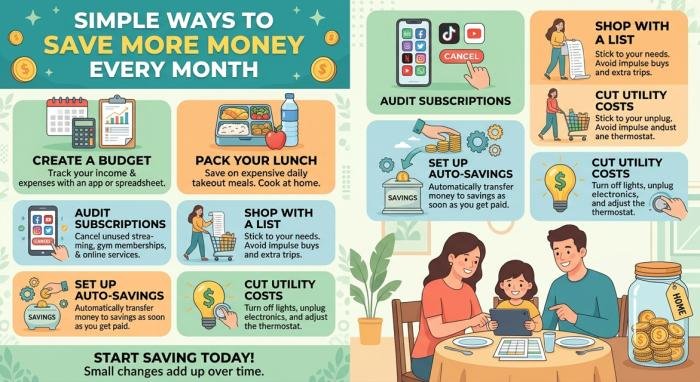
Saving money becomes easier when it is treated as a regular responsibility. Instead of waiting until the end of the month, transfer a portion of your income into savings immediately after receiving payment.
This approach is commonly called paying yourself first. It encourages individuals to prioritize their financial goals before spending money on optional purchases.
Start with an amount that fits your income. If saving 20% is difficult, begin with 5% and increase it when your financial situation improves. Financecub Com emphasizes that consistency is more important than starting with a large contribution.
Setting specific goals can also improve saving habits. For example, you may want to save for education, a new computer, a family vacation, home improvements, or future business expenses.
Automatic transfers can make the process easier. When money moves into savings automatically, there is less temptation to spend it.
Review your savings progress every month. This helps you understand whether your current strategy is working and whether adjustments are necessary.
Manage Debt and Avoid Unnecessary Borrowing
Debt can become a serious financial burden when borrowing exceeds the ability to repay. Credit cards, personal loans, and other financial commitments may involve interest charges that increase the total amount owed.
The first step toward controlling debt is listing all outstanding balances. Record the remaining amount, interest rate, minimum payment, and due date for every loan.
Two popular repayment methods can help organize debt payments.
Debt Snowball Method
This method focuses on paying off the smallest outstanding balance first. Continue making minimum payments on other debts while directing additional money toward the smallest balance. Once it is cleared, move to the next smallest debt.
Debt Avalanche Method
This method prioritizes debts with the highest interest rates. It can reduce the total interest paid over time because expensive debts receive additional payments first.
Financecub Com encourages borrowers to select a repayment strategy that matches their financial circumstances. Paying bills on time and avoiding unnecessary borrowing can also help prevent additional financial pressure.
Develop Better Spending Habits
Good spending habits are necessary for maintaining financial stability. People do not need to stop enjoying their money, but they should understand the difference between essential purchases and optional expenses.
Before buying something, consider whether it is necessary and whether it fits your budget. Comparing prices from different sellers can also help you avoid paying more than necessary.
Impulse buying is another common problem. Promotional offers and online advertisements may encourage unnecessary purchases. Waiting 24 hours before buying nonessential items can help prevent spending decisions based on temporary excitement. Some practical ways to control everyday expenses include:
- Prepare a shopping list before visiting stores.
- Cook meals at home more frequently.
- Cancel unused subscriptions.
- Compare prices before purchasing expensive products.
- Set a monthly entertainment budget.
- Repair useful items instead of replacing them immediately.
Financial Planning for Students and Young Adults
Students and young adults should develop responsible money habits as early as possible. Although their income may be limited, learning to manage money can prepare them for future responsibilities.
Start by calculating available income from family support, scholarships, part-time jobs, internships, or freelance work. Then divide the money between education, transportation, food, accommodation, and personal expenses.
Avoid unnecessary borrowing whenever possible. Before accepting an education loan, understand its repayment conditions and interest charges.
Young adults can also benefit from learning about bank accounts, savings products, insurance, and basic investment principles.
Financecub Com encourages students to track daily spending, save small amounts regularly, and develop professional skills that may improve future earning opportunities.
Starting financial planning early creates more time to build good habits and prepare for important life goals.
Investment Planning for Long-Term Growth

Saving and investing are two different financial activities. Savings provide accessible money for short-term needs, while investments offer opportunities for potential long-term growth.
Before investing, identify your financial goals and understand how much risk you can accept. Never invest money needed for immediate household expenses or emergency situations.
Common investment options include:
Stocks: Stocks represent ownership in companies. Their prices can increase or decrease depending on business performance and market conditions.
Bonds: Bonds are debt instruments issued by governments or corporations. They may provide interest payments, although risks remain.
Mutual Funds: These funds combine money from multiple investors to purchase a collection of assets.
Exchange-Traded Funds: ETFs provide exposure to groups of securities and are traded on stock exchanges.
Real Estate: Property may provide rental income or potential appreciation, but it also involves maintenance and ownership costs.
Fixed Deposits: These products offer a predetermined interest rate for a specified period, subject to the financial institution’s terms.
Financecub Com encourages readers to research investment products before making decisions. Diversification, understanding fees, and reviewing potential risks are important parts of responsible investing.
Remember that investment returns are not guaranteed. Consider consulting a qualified financial professional before making significant investment decisions.
The Importance of Financial Education
Financial education helps individuals make informed decisions about income, spending, borrowing, and investing. It also makes it easier to compare financial products and recognize misleading offers.
One important concept is compound interest. It occurs when interest is earned on the original amount and previously accumulated interest. Over time, compounding can support financial growth when returns are positive and contributions are maintained.
Other useful financial topics include inflation, loan interest rates, credit card charges, insurance coverage, taxes, and investment risks.
Financecub Com supports the importance of continuous financial education because financial products and personal circumstances can change. People should regularly improve their knowledge and use reliable information before making important financial decisions.
Financial Planning for Families
Family finances often involve several responsibilities, including housing, food, healthcare, education, transportation, and savings. A household budget can help families organize these expenses and reduce unnecessary spending.
Family members should discuss shared responsibilities and agree on realistic financial priorities. Planning grocery purchases, monitoring utility bills, and preparing for educational expenses can improve household money management.
It is also important to maintain emergency savings for unexpected family needs. Financecub Com highlights that regular communication and shared financial goals can make household planning more effective.
Families should review their budgets whenever income, expenses, or responsibilities change. This helps ensure that their financial plans remain practical.
Retirement Planning for a Better Future
Retirement planning helps individuals prepare financially for the time when they may no longer receive regular employment income.
Start by estimating future living expenses, including housing, food, healthcare, transportation, and personal activities. Consider inflation because the cost of living may increase over time.
Depending on your country and employment situation, retirement options may include pension programs, provident funds, employer-sponsored plans, and individual savings arrangements.
Financecub Com emphasizes the importance of starting early and contributing consistently. Even modest contributions may become valuable over a long period, depending on returns, fees, and other conditions.
Review retirement plans regularly to ensure they remain suitable for your age, income, and future responsibilities.
Conclusion
Building a healthy financial future does not happen overnight. It requires consistent effort, responsible decisions, and a clear understanding of personal financial goals. Financecub Com emphasizes the value of creating a realistic budget, controlling unnecessary spending, maintaining emergency savings, and managing debt effectively. These practical habits can help individuals and families handle everyday financial responsibilities while preparing for future needs.
Whether you want to save more money, reduce outstanding debt, improve your spending habits, or prepare for retirement, taking small steps today can make a meaningful difference over time. Financecub Com encourages readers to develop better financial habits and remain consistent with their plans. With patience, discipline, and informed decisions, you can build stronger financial confidence and move toward a more secure future.
FAQs
Q1. What is Financecub Com?
Ans: Financecub Com is a focus topic related to personal finance, budgeting, saving, debt management, and financial planning. It emphasizes practical financial habits that can help individuals make better money decisions.
Q2. Why is financial planning important?
Ans: Financial planning helps people organize their income, control spending, prepare for unexpected expenses, and work toward future goals. It can also reduce financial stress.
Q3. How can beginners start managing money?
Ans: Beginners should calculate their monthly income, record expenses, create a realistic budget, and save a small amount regularly. Reviewing spending habits can help improve financial control.
Q4. What is the 50/30/20 budgeting method?
Ans: It is a budgeting method that divides after-tax income into 50% for needs, 30% for wants, and 20% for savings and debt repayment. The percentages can be adjusted according to personal circumstances.
Q5. How much should I save for emergencies?
Ans: A common recommendation is to save enough to cover three to six months of essential living expenses. The appropriate amount depends on income stability and family responsibilities.
Q6. What is the best way to reduce debt?
Ans: The debt snowball method focuses on smaller balances, while the debt avalanche method prioritizes higher-interest debts. Both approaches can help organize repayments.
Q7. Is investing suitable for beginners?
Ans: Beginners can consider investing after understanding their financial goals, emergency savings, and risk tolerance. Researching investment products before making decisions is important.