Infoohub Org – Useful Online Resources, Updates and Informative Content

Infoohub Org is a useful topic for readers interested in online resources, informative content, and digital updates. In today’s digital world, people rely on websites to find practical information, read helpful articles, and stay informed about subjects that matter to them. An information-focused platform can make online research easier by presenting content in a clear and organized way.
Whether readers are searching for general knowledge, technology-related topics, or everyday guidance, choosing relevant and reliable online resources can help them save time and make better decisions. Infoohub Org provides a starting point for discussing how digital information platforms can support readers in their daily lives.
What Is Infoohub Org?
Infoohub Org can be approached as an information-focused online destination where readers may seek articles, general knowledge, digital resources, and useful updates. The name combines the idea of information with a hub, suggesting a central place where different types of content can be organized for convenient access.
For readers, the main appeal of an information platform is the possibility of finding relevant material without having to navigate through numerous unrelated pages. A well-organized website can bring together articles on different subjects, helping visitors move from one topic to another according to their interests.
Read More: How to Earn Money From Facebook: 10 Practical Ways to Make Income
It is important to distinguish between the general purpose suggested by a website’s name and its verified features. The precise services, categories, publishing schedule, and editorial policies of Infoohub Org should be confirmed through its official website. Without checking those sources, specific claims about its ownership, current content, or available services should not be treated as established facts.
Nevertheless, information websites have an important role in the digital environment. They can help readers access explanations, compare ideas, find practical suggestions, and build their general knowledge. Their effectiveness depends on providing relevant information in a responsible, organized, and reader-friendly format.
Why Online Information Platforms Matter
Online information platforms help connect readers with material that supports everyday activities. In the past, people often relied on printed publications, reference books, or direct assistance to answer questions. Today, many of these tasks can begin with a search on the internet.
A useful information website can reduce the time required to locate basic explanations. For example, someone who wants to understand a digital term may prefer a clearly written article rather than a lengthy technical document. Similarly, a student researching a general subject may benefit from an introductory explanation before consulting academic references.
Platforms such as Infoohub Org can be considered within this wider context of online information access. Their usefulness depends on how effectively they address readers’ needs and whether their articles provide accurate, understandable, and relevant information.
Online resources also support independent learning. Readers can choose subjects that interest them, revisit articles when necessary, and continue researching through other reliable sources. This flexibility makes the internet useful for people with different schedules, experience levels, and educational backgrounds.
Common Types of Content Found on Information Websites
Information websites can cover many subjects depending on their purpose and editorial direction. Some focus on a particular industry, while others publish material across several categories. Understanding these common content types helps readers decide which resources are appropriate for their needs.
Educational Articles
Educational articles explain concepts, terms, processes, and subjects in accessible language. They may introduce a topic to beginners or provide a foundation for more advanced research.
A helpful educational article usually begins with a clear explanation, develops the subject through organized sections, and provides examples when necessary. This approach allows readers to follow the discussion without feeling overwhelmed by unfamiliar terminology.
Technology and Digital Resources
Technology-related content may cover websites, applications, software tools, online safety, digital productivity, and common technical problems. Such information can be useful for people who want to become more comfortable with digital services.
Because technology changes frequently, readers should pay attention to publication dates and verify important instructions against current official documentation.
General Knowledge and Practical Guidance
General knowledge articles address everyday questions and common interests. They may explain ordinary processes, provide practical suggestions, or introduce subjects that readers want to understand better.
Practical guidance is most useful when it includes clear steps, realistic examples, and limitations. Readers should be able to identify what information applies to their situation and when they need additional assistance.
News and Informative Updates
Some websites publish updates about current events, industry developments, digital trends, or changes in public services. Timely content can help readers remain informed, provided that the information is accurately sourced and clearly dated.
Readers should distinguish between factual reporting, personal opinions, promotional material, and predictions. This distinction helps prevent confusion when different sources present conflicting claims.
Lifestyle and Everyday Topics
Lifestyle content may discuss productivity, organization, communication, hobbies, personal interests, and everyday routines. These articles can provide ideas and practical suggestions for common situations.
However, readers should consider the context of the advice rather than assuming that a single recommendation works for everyone. Topics involving health, finance, or legal decisions require additional care and appropriate professional sources.
How Infoohub Org Can Fit Into Everyday Online Research
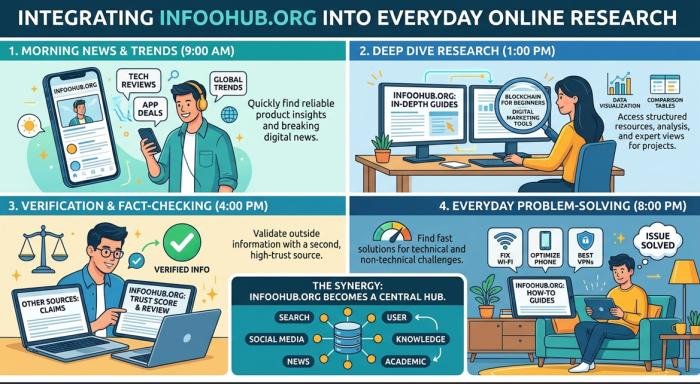
An information website is most useful when readers approach it with a clear purpose. Instead of browsing randomly, visitors can identify the question they want to answer and use relevant categories, search functions, or article headings to locate suitable content.
For example, a reader who wants to understand a digital concept can begin with an introductory article. After reviewing the explanation, the reader can identify unfamiliar terms and consult authoritative sources for clarification. This method creates a more organized research process and reduces the likelihood of relying on a single incomplete explanation.
Infoohub Org may serve as a starting point for this kind of activity if its published content matches the reader’s interests. Before relying on any particular article, visitors should assess whether the information is current, whether the claims are supported, and whether the content answers the question being asked.
The following table summarizes how information platforms can support different reader needs.
| Reader need | Potential content type | Main benefit | Recommended practice |
| Basic knowledge | Introductory articles | Explains unfamiliar subjects | Check definitions against reliable references |
| Technology help | Digital guides and tutorials | Supports common online tasks | Confirm instructions using official documentation |
| Current information | News and updates | Helps readers follow changes | Check dates and original sources |
| Personal interests | Lifestyle and general articles | Provides ideas and practical suggestions | Consider personal circumstances |
| Academic research | Educational resources | Offers background knowledge | Use credible academic and institutional sources |
| Digital safety | Security and privacy guides | Encourages safer online behavior | Follow current guidance from trusted authorities |
Important Features of a Useful Information Website
The usefulness of a website is influenced by several factors. A strong information platform should make its content easy to locate, read, evaluate, and revisit.
Clear Website Navigation
Navigation helps readers move between sections and identify related content. Menus, category pages, breadcrumbs, and internal links can make a website easier to use.
A clear structure is particularly important when a website covers several subjects. Readers should not have to search through unrelated pages to find basic information.
Readable and Organized Content
Good articles use descriptive headings, short paragraphs, and logical transitions. These elements allow readers to scan a page before deciding which sections require closer attention.
A readable layout also benefits people accessing websites on mobile phones. Since many visitors use smaller screens, paragraphs and tables should remain easy to follow without excessive horizontal scrolling.
Relevant and Accurate Information
Content quality is more important than the number of articles published. An informative website should aim to provide accurate statements, explain unfamiliar terms, and avoid unsupported promises.
When discussing changing subjects, authors should check the latest available information before publishing. Corrections and updates are also important when previously published material becomes inaccurate.
A Consistent Publishing Approach
A consistent publishing approach helps visitors understand what to expect from a website. This does not necessarily mean publishing new articles every day. It means maintaining appropriate editorial standards and updating existing content when necessary.
For subjects that change slowly, occasional revisions may be sufficient. For technology instructions, current events, and online services, more frequent checks may be needed.
Mobile-Friendly Design
A mobile-friendly website adjusts its presentation to different screen sizes. Text should be legible, navigation controls should be easy to use, and important content should not depend on complicated interactions.
Mobile usability can influence whether readers finish an article or leave because the page is difficult to navigate.
Benefits of Using Online Resources
Online resources offer several practical advantages when used thoughtfully. Their benefits extend beyond convenience because they can also support independent research and improve access to information.
Convenient Access to Information
Readers can access online articles from different locations, provided they have an appropriate device and internet connection. This flexibility makes digital resources convenient for people who need information outside traditional library or office hours.
A searchable website may also help readers return to a particular topic without reviewing an entire publication.
Support for Independent Learning
Independent learning allows individuals to choose what they want to study and proceed at their own pace. Informative articles can provide an accessible starting point for subjects that readers have not encountered before.
Readers can also compare several explanations and identify areas where further study is necessary. This approach encourages curiosity while allowing people to manage their own learning schedules.
Improved Digital Awareness
Online articles about websites, software, privacy, and digital communication can help readers make better decisions when using internet services.
For example, guidance about strong passwords, suspicious links, account security, and personal data can encourage safer habits. Such information should be checked against current recommendations from recognized cybersecurity organizations and official service providers.
Time-Saving Research
A well-written article can summarize basic information in one place, reducing the time required to understand a subject. Clear headings and concise explanations help readers locate relevant sections quickly.
However, saving time should not mean skipping verification. When accuracy is important, checking the original source remains a valuable part of the process.
Access to Different Perspectives
Different websites may explain the same subject from different viewpoints. Comparing those explanations can help readers identify common facts, recognize disagreements, and avoid accepting a single interpretation without question.
The quality of this benefit depends on the credibility of the sources. Multiple websites repeating the same unsupported claim do not necessarily provide independent confirmation.
How to Evaluate Information Published Online
Not every website provides reliable information. Readers should develop simple habits for assessing the credibility of online material before using it to make decisions.
Check the Publication Date
The publication date indicates when an article was first released. An updated date may show that the content has been revised, although the date alone does not prove that every statement is current.
For topics involving software, regulations, public services, or breaking news, readers should prioritize recent information from appropriate sources.
Identify the Original Source
Reliable articles often identify where their information comes from. These sources may include government agencies, research institutions, recognized organizations, official documentation, or direct statements from relevant authorities.
If an article makes an important claim without explaining its origin, readers should search for independent confirmation.
Separate Facts From Opinions
An article may contain both factual statements and personal interpretations. Opinion pieces are not automatically unreliable, but they should be recognized as opinions rather than treated as definitive evidence.
Look for language that clearly distinguishes verified information from predictions, preferences, and recommendations.
Watch for Misleading Claims
Headlines that promise guaranteed results, immediate success, or secret solutions deserve careful attention. Responsible content usually explains limitations and avoids presenting uncertain outcomes as guaranteed facts.
Readers should also be cautious about articles that pressure them to provide personal information or purchase something before they can access basic information.
Compare Independent Sources
Checking multiple credible sources can help clarify uncertain claims. The most useful comparison involves sources with relevant expertise and independent evidence, rather than several pages repeating the same wording.
For high-stakes decisions, use primary sources and qualified professional guidance whenever appropriate.
The Role of Search Engines in Finding Useful Content
Search engines help readers locate information across millions of web pages. A focused search query generally produces more relevant results than a broad phrase.
For example, a person searching for information about website security may use a specific phrase such as “how to identify a phishing website” rather than searching only for “internet.” The more precise query communicates the subject and the type of answer required.
Readers can also use quotation marks when searching for an exact phrase or include a website name when they want to find pages associated with a particular platform. Search operators may help narrow results, although their behavior can vary between search engines.
When searching for Infoohub Org, visitors should use the exact website name and verify that the result leads to the intended destination. Similar names, copied content, and misleading links can create confusion.
Search ranking should not be treated as a guarantee of accuracy. A page may appear near the top because of relevance, technical factors, popularity, or other ranking signals. Readers still need to assess the information itself.
How Content Quality Supports Website Growth
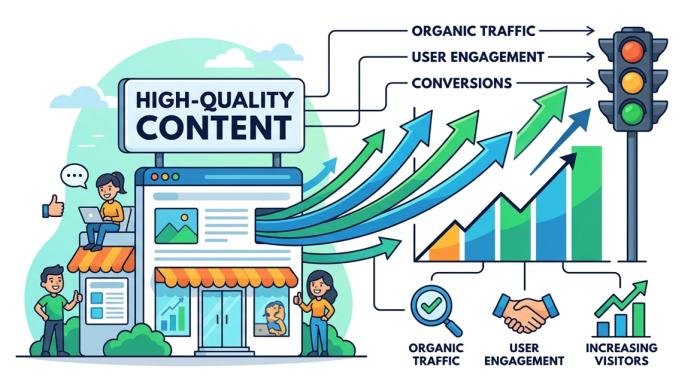
Useful content can help an information website build a stronger relationship with its audience. When readers find answers to their questions, they may return for related articles or share the material with others.
Writing for Real Reader Needs
Content planning should begin with the questions readers are likely to ask. Articles should provide direct answers and include enough explanation to make those answers practical.
Writers can identify common questions through audience feedback, relevant search queries, and discussions within the subject area. The goal is to address genuine information needs rather than publish articles solely to repeat popular phrases.
Using Headings Effectively
Headings organize an article into meaningful sections. They allow readers to identify the main topic of each section and help writers maintain a logical flow.
A good heading describes the content that follows it. Vague headings and unnecessary repetition make articles harder to navigate.
Maintaining Originality
Original content presents information in a useful way rather than copying another publisher’s work. Writers should develop their own explanations, cite sources when appropriate, and respect copyright requirements.
Originality also involves adding value. A page that simply repeats common statements without explanation or practical guidance may offer little benefit to readers.
Updating Older Articles
Existing articles may need revision when facts change, links stop working, or instructions become outdated. Regular editorial reviews can help maintain accuracy and improve the reader experience.
Updates should reflect genuine improvements rather than changing dates without reviewing the content.
Building Reader Trust
Trust develops through consistent quality, transparent sourcing, accurate descriptions, and responsible corrections. Websites should avoid exaggerated claims about what their content can accomplish.
Clear contact information, appropriate privacy notices, and transparent editorial practices can also help visitors understand how a website operates.
Search Engine Optimization for Infoohub Org
Search engine optimization, commonly known as SEO, helps website owners make their content easier for search engines and readers to interpret. A practical SEO strategy starts with useful information and a clear understanding of the audience.
The phrase “Infoohub Org” can be used as a focus keyword when the article is specifically intended to discuss that name. However, repeating the phrase excessively can make the writing unnatural and reduce readability.
Creating a Relevant Meta Title
A meta title communicates the subject of a webpage in search results and browser tabs. It should describe the page accurately and give readers a clear reason to select it.
For an article about useful online resources and informative content, a suitable title is:
Infoohub Org – Useful Online Resources, Updates and Informative Content
The title connects the website name with the central subject of the article. Website owners should ensure that the title reflects the actual page content rather than promising services that the website does not provide.
Writing a Helpful Meta Description
A meta description provides a short summary of a webpage. Search engines may use it to generate a search-result snippet, although they can select other page text when they consider it more relevant.
An appropriate description for this topic could be:
“Infoohub Org covers the value of useful online resources, informative articles, and timely updates while helping readers evaluate content and find relevant information.”
This description introduces the topic in natural language without making unsupported claims about specific website features.
Using a Simple Permalink
A permalink is the address of a webpage. Short, descriptive URLs are easier to read and share.
A possible permalink for this article is:
The final URL should follow the website’s existing structure and avoid unnecessary words, random characters, or excessive keyword repetition.
Adding Internal and External Links
Internal links connect readers with related pages on the same website. External links point to other sources that provide supporting information.
For example, an article about digital safety may link to official cybersecurity guidance. A general educational article may link to relevant institutional resources.
Links should be relevant to the surrounding discussion and should lead to pages that provide genuine value.
Prioritizing People Over Keyword Frequency
SEO works best when content satisfies the reader’s purpose. The focus keyword should appear naturally in appropriate locations, including the title and introduction when relevant.
Writers should avoid inserting the keyword into every paragraph simply to increase repetition. Search engines use many signals when assessing pages, and excessive keyword repetition can make content less useful.
Online Safety When Visiting Information Websites
Online safety matters whenever people browse websites, follow links, create accounts, or share personal information. Even a website that provides general information should be approached with sensible security habits.
First, check the web address before entering personal details. Look for misspellings, unexpected domain variations, or links that lead somewhere different from what the page suggests. An encrypted connection, usually indicated by HTTPS, protects information in transit but does not independently prove that a website is trustworthy.
Second, avoid downloading files unless their source and purpose are clear. Unexpected downloads, browser notifications, and software installation prompts should be treated cautiously.
Third, never share passwords, one-time verification codes, or sensitive financial information in response to an unsolicited request. Legitimate organizations generally provide established channels for account management and support.
Fourth, review privacy notices before submitting information through a website. Understand what data may be collected, why it is needed, and how it may be used.
Finally, keep browsers and operating systems updated. Current software can include security improvements that help reduce exposure to known vulnerabilities.
These practices apply when visiting Infoohub Org or any other online platform. They help readers reduce common risks without assuming that a website is either safe or unsafe based only on its name.
The Future of Online Informative Content
The way people access online information continues to change. Improvements in search technology, mobile devices, accessibility tools, and artificial intelligence are influencing how content is created and consumed.
Readers increasingly expect information to be clear, easy to navigate, and suitable for their devices. Websites that prioritize readability, accurate sourcing, and useful explanations are better positioned to meet these expectations.
Artificial intelligence can assist with research, drafting, organization, and language support. However, automatically generated material can contain mistakes, outdated statements, or misleading claims. Human review, fact-checking, and appropriate editorial responsibility remain important.
Accessibility is another important consideration. Descriptive headings, meaningful link text, readable contrast, and text alternatives for informative images can make content more usable for people with different needs.
Privacy and transparency will also remain important. Visitors may prefer websites that explain their data practices clearly and avoid unnecessary requests for personal information.
Best Practices for Getting Value From Infoohub Org
Readers can improve their online research habits by following a few practical steps.
- Start with a clear question. Identify what you want to find out before opening multiple articles.
- Choose relevant content. Read pages that directly address your topic rather than relying on unrelated material.
- Check the source. Look for supporting references and identify the organization or author responsible for the information.
- Review the date. Confirm that the material is suitable for a subject that may change over time.
- Compare important claims. Consult independent, reputable sources when accuracy matters.
- Protect your privacy. Avoid sharing sensitive information unless there is a clear and legitimate reason.
- Save useful resources. Bookmark trustworthy pages so you can return to them when needed.
- Apply information carefully. Consider whether advice fits your circumstances and seek qualified assistance for high-stakes decisions.
Conclusion
Infoohub Org highlights the importance of accessible online resources, informative articles, and relevant updates in the modern digital environment. Readers can benefit from information websites by finding useful content, developing their knowledge, and improving their online research habits. However, it is important to check the accuracy of published information, review sources, and confirm that content is up to date before Relying on it. A reliable online experience depends on both the quality of the information provided and the way readers evaluate it. By focusing on relevant content, clear communication, and responsible browsing, readers can make better use of online resources and enjoy a more productive digital experience.
FAQS
Q1. What is Infoohub Org?
Ans: Infoohub Org is the name of an online information-related platform. Its name suggests a connection with informational content and digital resources. Readers should visit the official website to confirm its current purpose, published categories, and available features.
Q2. What type of content can readers expect from an information website?
Ans: Information websites may publish educational articles, technology guides, general knowledge, practical advice, and news or updates. The exact subjects available depend on the individual website’s editorial focus and publishing practices.
Q3. Is Infoohub Org suitable for online research?
Ans: It may serve as a starting point if its content is relevant to the research topic. Readers should evaluate the quality of each article, check its publication date, and verify important claims through reliable sources before relying on the information.
Q4. How can readers verify information published on Infoohub Org?
Ans: Readers can check the author’s information, review publication and update dates, follow cited references, and compare claims with trustworthy independent sources. Official government websites, recognized institutions, and original documentation are useful references for many subjects.
Q5. Why is accurate information important for an online platform?
Ans: Accurate information helps readers make informed decisions and reduces the risk of confusion. Websites that use reliable sources, correct errors, and update outdated articles can provide a more dependable experience for their audiences.
Q6. Can Infoohub Org help readers stay informed about digital topics?
Ans: An information website can help readers follow digital topics when it publishes relevant, current, and well-supported material. Readers should confirm that any technology instructions or updates reflect current conditions before applying them.
Q7. What should readers check before trusting an online article?
Ans: Readers should examine the source, publication date, supporting evidence, and distinction between factual reporting and opinion. They should also be cautious of exaggerated promises, suspicious links, and requests for sensitive personal information.